How to Choose the Best Online Physics Course for Class 11 and 12
- Posted by Kaustubhan Srivathsan
- Date October 22, 2026
Physics is an important subject for students in Classes 11 and 12, especially those preparing for board examinations and competitive exams such as JEE and NEET. However, understanding complex theories, formulas, numerical problems, and scientific principles can be challenging without the right learning approach. Choosing an online physics course that matches your learning needs can help you understand concepts clearly and develop confidence in solving problems.
With many digital learning options available, students and parents should compare teaching methods, syllabus coverage, learning resources, flexibility, and accessibility before making a decision. The right course should support conceptual understanding rather than simply encourage memorisation.
Why Choosing the Right Online Physics Course Matters
Physics requires a strong understanding of fundamental concepts and their practical applications. Students must learn to connect theories with formulas, diagrams, experiments, and numerical problems. A suitable online physics course can make these concepts easier to understand through structured lessons and visual explanations.
Students should consider their current knowledge, academic goals, and preferred learning style. Some may need additional support with basic concepts, while others may want to practise advanced questions for competitive examinations.
A well-organised learning programme can also help students revise difficult topics at their own pace. Before selecting a platform, check whether its teaching approach supports independent learning, regular revision, and consistent academic progress.
Check the Physics Syllabus and Chapter Coverage
Before enrolling, ensure that the course covers the syllabus relevant to your class and examination board. Class 11 Physics introduces foundational concepts, including motion, laws of motion, work and energy, thermodynamics, and oscillations. Class 12 introduces topics such as electrostatics, current electricity, magnetism, optics, and modern physics.
Students should check the chapter list and compare it with their prescribed syllabus. This is particularly important when choosing between CBSE, ICSE, and other curriculum requirements.
A reliable learning platform should organise lessons logically, making it easier to study topics in sequence. Students preparing for JEE or NEET should also verify whether the course includes the additional practice and question difficulty appropriate for their entrance examinations.
Look for Visual Learning and 3D Physics Animations
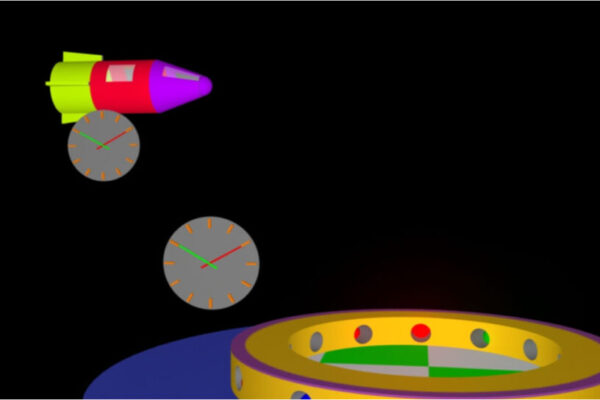
Many physics concepts involve processes that are difficult to imagine through text alone. Visual explanations, diagrams, simulations, and 3D animations can help students understand how scientific principles work.
For example, animations can illustrate the movement of charged particles, the behaviour of light, magnetic fields, and the relationship between physical quantities. These representations can make abstract ideas more understandable and help students connect theory with practical examples.
When evaluating an online physics course, check whether the platform uses visuals to explain concepts rather than relying entirely on lengthy lectures. Interactive learning tools can also encourage students to explore relationships between variables and observe how changes affect physical outcomes.
Visual-based Physics tutorials use 3D animations, short conceptual videos, and interactive learning tools to help students understand challenging topics more easily.
Evaluate the Quality of Physics Teachers
The quality of teaching plays an important role in learning physics. An effective teacher explains concepts step by step, connects formulas with their underlying principles, and demonstrates how to solve numerical problems.
Before choosing a course, review available sample lessons to understand the teaching style. Check whether explanations are clear, examples are relevant, and difficult topics are presented in a logical sequence.
Students should also consider whether the learning materials address common mistakes and explain why particular formulas or methods are used. These details can help learners develop problem-solving skills instead of memorising solutions.
Good teaching resources should encourage curiosity, logical thinking, and independent practice. Look for lessons that make complex concepts approachable and provide sufficient explanation for students to review them independently.
Compare Live Classes and Self-Paced Learning
Students have different schedules, learning speeds, and academic responsibilities. Therefore, it is important to understand the difference between live classes and self-paced learning before choosing a programme.
Live sessions provide scheduled instruction and may allow students to ask questions in real time. They can be helpful for learners who prefer a fixed routine and direct interaction with teachers.
Self-paced learning allows students to study whenever it suits them. Learners can revisit challenging lessons, pause videos to work through examples, and revise important concepts before examinations.
When comparing online physics classes, consider how much flexibility you need and whether the platform provides access to recorded lessons or organised learning modules. Choose a format that fits your daily schedule and encourages regular study.
Check Chapter-Wise Videos, Notes, and Practice Resources
A good Physics learning platform should organise educational materials in a clear and accessible format. Chapter-wise resources help students locate specific topics without searching through unrelated lessons.
Short conceptual videos can be particularly useful when revising individual ideas or reviewing difficult sections of a chapter. Notes, worked examples, diagrams, and practice questions can provide additional support.
Students should also check whether the resources are suitable for their current academic level. Beginners may need detailed explanations and fundamental examples, while advanced learners may require more challenging questions.
Before enrolling in an online physics course, review the available learning materials and confirm that they cover your important chapters. A structured collection of lessons can make revision more organised and help students identify topics that require additional attention.
Choose a Course That Supports CBSE, ICSE, JEE, and NEET Preparation
Students may have different academic goals depending on their school curriculum and future plans. Some primarily focus on board examinations, while others prepare for engineering or medical entrance examinations.
For CBSE and ICSE students, syllabus alignment is essential. The course should cover relevant concepts and provide explanations that support classroom learning and examination preparation.
JEE aspirants need a strong understanding of fundamental physics principles, along with extensive numerical practice and analytical problem-solving. NEET aspirants also benefit from conceptual clarity, careful application of formulas, and regular practice with examination-style questions.
When evaluating online coaching for physics, check whether the programme explicitly supports your target examination. Do not assume that every school-level course provides complete entrance examination preparation.
A suitable course should match your goals, current understanding, and required level of practice.
Review Chapter-Wise Videos and Concept Explanations
The organisation and clarity of video lessons can influence how effectively students study independently. Well-structured videos should introduce a concept, explain the relevant principles, demonstrate examples, and summarise the important points.
For instance, students learning electrostatics should be able to understand electric charges, fields, and potential through connected explanations. Similarly, lessons on optics should clarify how light behaves and how relevant equations are applied.
Look for platforms that make lessons easy to revisit and organise topics into manageable sections. Short videos can support focused learning, while detailed explanations may be necessary for more challenging concepts.
Check Device Compatibility and Learning Accessibility
Online learning becomes more convenient when students can access lessons using their preferred devices. Before choosing a platform, check whether it works properly on desktop computers, laptops, tablets, and smartphones.
Students who travel or have busy schedules may prefer mobile access, while others may find a larger screen more comfortable for studying diagrams, equations, and detailed explanations.
Also consider the platform’s navigation, video playback, and organisation of learning materials. A clear interface makes it easier to find chapters, continue lessons, and return to previously studied topics.
How to Choose an Online Physics Course for Class 11 vs Class 12
Class 11 and Class 12 students have different learning priorities, so the course should reflect their academic stage.
Students in Class 11 generally need to develop a strong foundation in mechanics, motion, energy, thermodynamics, and other fundamental areas. They should prioritise clear explanations, progressive learning, and sufficient practice with basic numerical problems.
Class 12 students often need to revise a broader range of concepts while preparing for board examinations and, where applicable, entrance tests. Their priorities may include electrostatics, electricity, magnetism, optics, and modern physics.
When comparing an 11th-grade physics online class with options for senior students, check the chapter sequence, level of detail, and suitability for your examination goals. Similarly, online physics classes for class 12 should provide relevant syllabus coverage and opportunities for revision and problem-solving.
In both classes, choose resources that match your current understanding rather than selecting a course based only on popularity.
Checklist Before Enrolling in an Online Physics Course
Before making a final decision, use this checklist to compare available learning platforms:
- Syllabus coverage: Does the course include the chapters you need?
- Teaching quality: Are concepts explained clearly with suitable examples?
- Visual resources: Are animations, diagrams, or interactive tools available where useful?
- Learning flexibility: Can you study at a pace that suits your schedule?
- Practice materials: Are notes, examples, and revision resources provided?
- Examination support: Does the course match your CBSE, ICSE, JEE, or NEET goals?
- Device compatibility: Can you access lessons on your preferred device?
- Course value: Do the available features meet your learning needs and budget?
Compare these factors before committing to a platform. If a demo lesson is available, review it to understand the teaching style and learning experience.
Conclusion
Choosing the right physics learning platform involves more than comparing course names or popularity. Students should evaluate syllabus coverage, teaching quality, visual resources, learning flexibility, practice materials, and examination requirements.
PHYSICSMODELS offers 3D animations, short conceptual videos, and interactive tools designed to support conceptual learning across Classes 9 to 12. By comparing these features with your academic needs, you can make a more informed decision and build a stronger foundation in physics.
Frequently Asked Questions
How do I choose the best online physics course for Class 11?
Look for clear explanations, complete syllabus coverage, structured lessons, and practice resources that help you understand fundamental concepts.
What should Class 12 students consider before choosing a physics course?
Class 12 students should check syllabus coverage, revision resources, numerical practice, and suitability for board examinations or entrance tests.
Can visual learning help students understand physics?
Yes. Diagrams, animations, and interactive tools can help explain abstract concepts and make scientific processes easier to visualise.
Is self-paced physics learning suitable for school students?
Self-paced learning can be useful for students who want to revisit lessons, revise difficult topics, and organise their study schedules independently.
Do PHYSICSMODELS offer physics lessons for different classes?
PHYSICSMODELS provides visual-based physics learning resources for Classes 11 and 12, featuring chapter-wise videos, 3D visuals, detailed explanations, solved problems, and interactive tests and quizzes. Since the physics syllabus is extensive, students can also start learning in Classes 9 and 10 to build a strong foundation and gain valuable preparation time.

Engineer MBA (IIM Calcutta), with 42+ years of rich experience in topclass companies in Automotive R&D, and others.
You may also like